
Overview
In April 2026, the Hong Kong Institute for Monetary and Financial Research (HKIMR), in collaboration with the CFA Institute, published a report “Navigating the Green Shift: Opportunities and the Evolving Landscape of Transition Finance”. The report finds that transition finance has real momentum. Frameworks are maturing, taxonomies are converging and transition planning is becoming more common. However, it also identified a large gap between a credible plan and a funded project, as investors struggle to find bankable deals, data doesn’t link to returns, and risk-return mismatches that private capital won't carry alone.
This event aims to move the conversation from what transition finance is to where the money should go by thinking of transition as a system consisting of a network of assets that must move together. While most of the debates still center on disclosures and corporate plans, we will follow the capital instead to move the discussion forward.
To determine how to close this gap, we will focus on two key areas for Hong Kong and the Greater Bay Area (GBA): energy and buildings, which represent two halves of one system. On the one side sit the changes needed in power plants, grids and storage that generate and move electricity. On the other, the industrial, commercial, and residential buildings as well as the infrastructure that consumes it. Without a focus on both sides, achieving transition targets will remain challenging.
Hong Kong is already laying the groundwork to make these sectors investable. The Hong Kong Taxonomy for Sustainable Finance now recognizes transition activities, and its next phase extends criteria to hard-to-abate industries. The Green and Sustainable Finance Grant Scheme now covers transition bonds and loans. Regulators have begun publishing sector-by-sector guidance on transition finance. And the newly launched Green Accelerator sets out to turn proven green technologies into bankable projects across emerging markets. The question is how these pieces come together to move capital at scale.
Following the opening remarks by the HKIMR and the HKGFA, the panel session will deconstruct the energy and buildings sectors into their investable components. The panel will examine the entities responsible for development and financing, as well as the factors that enhance bankability. They will analyse the alignment of specific financial instruments, such as green and transition bonds, sustainability-linked loans, project finance, infrastructure equity, and supply chain finance, with each segment. Furthermore, the discussion will address how blended finance and public de-risking can bridge the risk-return gap, how to prevent the lock-in of high-carbon assets, and how capital raised in Hong Kong can be directed toward projects across the region.
Participants will leave with a practical map of where transition capital can be deployed today, and what has to change for more to flow.
This webinar is worth 1 PL credit. If you are a CFA Institute member and attended in person, you may self-report this activity in your tracker.
Agenda
- Registration & Networking
- Opening Remarks by Dr. Giorgio Valente, Head, Hong Kong Institute for Monetary and Financial Research (HKIMR)
- Opening Remarks by Tracy Wong Harris, Chief Investment Officer & Head of Asia Team, Green Accelerator; Executive Vice President, Hong Kong Green Finance Association (HKGFA)
- Presentation of the report by Dr. Elsa Dong, Senior Manager, Hong Kong Institute for Monetary and Financial Research (HKIMR)
- Panel: Following Capital through the Supply Chain
Panelists:
Ellie Tang, Director, Sustainable Investing, Fidelity International
Johnny Yu, Advisor to the Chairman and the Head of Sustainability Department
David von Eiff, Director, Industry Platforms, CFA Institute (Moderator)
Speakers

Dr. Elsa Dong

Dr Giorgio Valente

David von Eiff, PhD
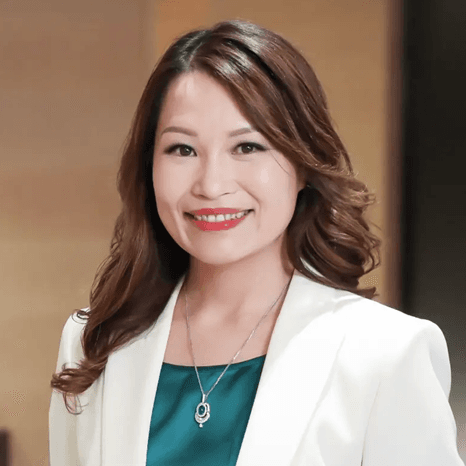
Tracy Wong Harris

Ellie Tang
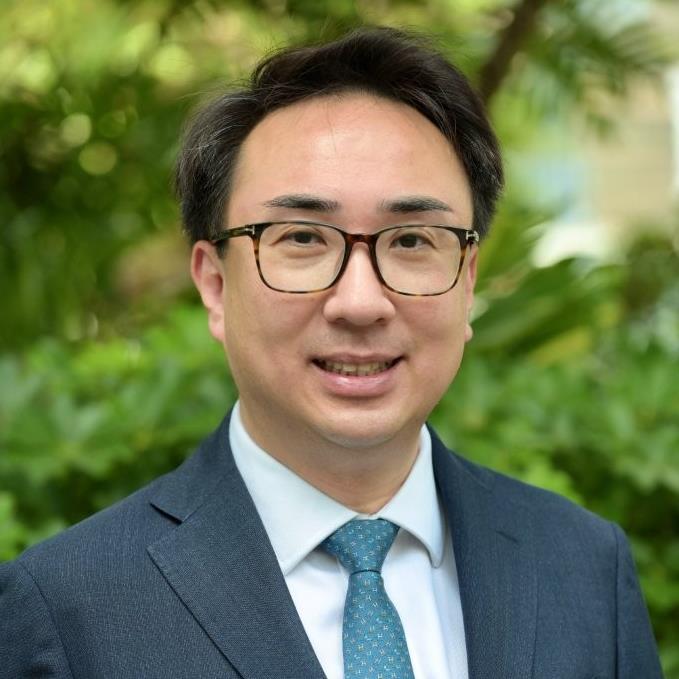
Johnny Yu, CFA

Christine Loh
Date and Time
Thursday, November 26, 2026
16:00 - 17:30 HKT